
I own exactly one pair of hand weights. They sit on the floor beside the rocking chair in my exercise room, and I pick them up most mornings after my coffee. That is the entire setup. No bench, no machine, no basement full of equipment I would have to dust around. If you are past sixty and your doctor has told you to keep moving, you may be assuming that strength training means a gym membership and rows of equipment you do not understand. It does not. The pair I use is the CAP Neoprene Dumbbell Pair, two 3 lb weights, six pounds total, built around a solid iron core with a neoprene coating and a non-slip grip. My hands are not strong anymore and the weights still do not slide out of them. That is where I started five months ago. It is still where I am, and my right knee is steadier for it.
I want to be plain about something before we start. Light dumbbells will not turn you into a different person. What they did for me was smaller and more useful. I can get up out of a low chair without pushing off the arms, and I take the stairs at my daughter's house without holding the rail. My doctor asked me to build leg strength after I slipped on the icy driveway two winters ago, and this is how I did it, in the order I would explain it to a friend at my kitchen table.
Six pounds that live beside my rocking chair
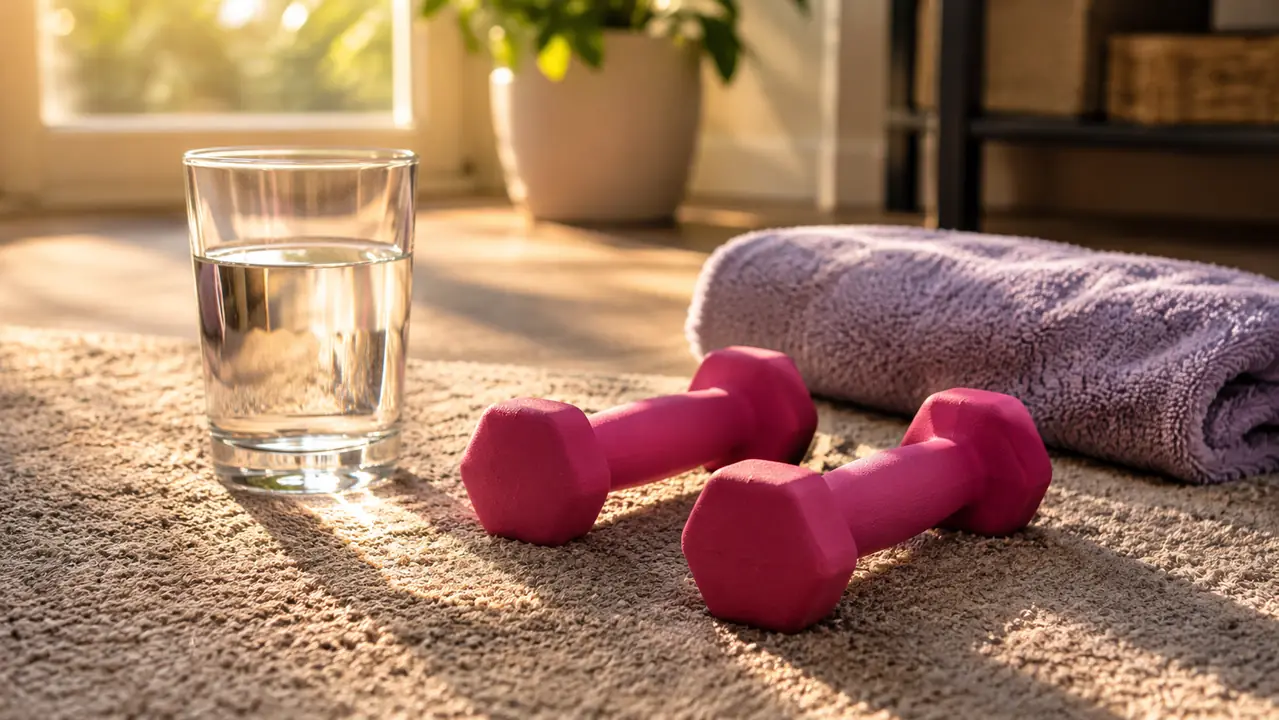
Two 3 lb weights, a solid iron core, and a neoprene coating that stays put in a warm hand. This is the only piece of equipment the whole routine below requires. Rated 4.8 across more than 4,000 reviews, which is about what I would expect from something this unglamorous that simply works.
Amazon Check Today's Price on Amazon →Step 1: Get cleared, then pick a weight you can actually control
Call your doctor first. Not because light weights are dangerous, but because you want to know what you are working around. I have mild osteoarthritis in my right knee, and my doctor's instruction was specific: keep moving, build the muscles that support the joint, and stop anything that causes sharp pain. That last part mattered more than the rest. It gave me permission to quit a movement, which made it easier to begin.
Then choose a weight you can lift ten times without your form falling apart. For most people starting over at sixty or seventy, that lands somewhere between three and five pounds. The 3 lb pair I use is exactly that, and after five months it is still enough, because I made the reps harder instead of the weight heavier. You will read that you should be lifting more by now. You should not, not if the heavier weight makes you lean or hold your breath.
Buy a pair, not a single weight. A pair keeps both sides working the same amount, and it stops the habit of leaning toward one heavy dumbbell. What you do not need is a set of ten. I have watched people buy a whole rack, use the middle two, and let the rest become a place to hang a sweatshirt. Start with one pair. When it gets easy you will know it in your hands, and you can decide then.
Step 2: Set up a spot you will actually walk into
I exercise in the spare bedroom we call the exercise room. It has a carpeted floor, a rocking chair, and one window. My setup cost me nothing beyond the weights, and that is on purpose. Anything that has to be assembled, unfolded, or moved out of the way gets skipped by the third week. I have tested this on myself more than once.
Here is the test I would give anyone. If you cannot be standing in your spot with weights in hand thirty seconds after you decide to exercise, the spot is wrong. Mine is six steps from the coffee pot. Yours might be the corner of the living room in front of the television, which is where I do my evening walking laps in February.
The hex heads help more than I expected them to. The flat sides mean the CAP weights sit still on the carpet between sets instead of rolling toward the baseboard while I am catching my breath. It is a small thing that you notice every single session, and it is the reason I would not go back to round dumbbells.
Step 3: Learn five movements and ignore the rest
There are five movements in my routine, and I do them in the same order every time. That way I spend none of my morning deciding what to do. The order runs from the biggest muscles to the smallest, so the hard part is finished while I am still interested.
Sit-to-stand. From the rocking chair, stand up without using your hands, then sit back down slowly. No weights. Ten times. This is the one that changed my mornings, and it is the one I would keep if I could only keep one. Biceps curl. Standing or seated, one arm at a time, elbow pinned against your side. Twelve slow reps each arm. Seated overhead press. Sitting tall in the chair, press the weights overhead until your arms are straight, then lower them slowly. Eight to ten reps. Lateral raise. Arms down at your sides, lift out to shoulder height and no higher. Ten reps. Bent-over row. Feet apart, hinge forward with a flat back, one hand braced on the chair seat, pull the weight toward your ribs. Ten reps each side.
That is the whole program, and it takes about twenty minutes. The weights are light, so the work comes from the tempo. Two seconds up, three seconds down. A three-pound weight taken slowly is a different exercise from a three-pound weight swung quickly, and only one of them is worth your morning.
Step 4: Put it on a schedule that survives a Michigan winter
I do this most mornings after coffee, twenty to thirty minutes. Not every morning. Most. Michigan keeps me indoors from November through March, and the first winter I promised myself daily sessions I had quit by January, because a promise you break once is a promise you stop making.
So the rule is smaller now. Five minutes counts. If I am stiff and unmotivated, I do the sit-to-stands and the curls and I stop. Nine times out of ten I finish the whole thing once I have started. The tenth time I did five minutes, which is five minutes more than the version of me from two winters ago managed.
One more thing about mornings. If your knees or hips are cranky when you wake up, wait an hour. My right knee needs coffee and a lap around the kitchen before it agrees to anything. Exercising into a stiff joint is how people decide strength training does not agree with them.
Step 5: Add reps before you add weight
With fixed light weights, progress does not come from buying something heavier every month. It comes from doing more reps, or doing them slower, or doing them with better control. I started at eight curls per arm and I am at twelve. Same weight. My arms look the same. The difference is that I can carry both bags of groceries in from the car at once now, and in September I could not.
Keep it written down. A calendar on the wall and a pencil works better for me than an app, because I walk past the calendar and I do not walk past the app. It also shows me the gaps, and the gaps are informative. Every one of mine lines up with a week when Gene was sick or the furnace went out.
Give it eight weeks before you judge it. Nothing visible happens in the first two. Then one ordinary morning you stand up out of the chair and notice you did not think about it first.
I started at eight curls per arm and I am at twelve, same three pounds. In September I could not carry both grocery bags in from the car. Now I do it without setting one down on the step.
What Three Pounds Will Not Do
It will not rebuild bone on its own, and it will not replace the walking my doctor also asked for. Light dumbbells build the muscles that hold you upright and help you carry things. They are one part of staying mobile, not the whole of it. Anyone who tells you a pair of hand weights solves everything is selling something.
It also will not work if you skip the sit-to-stands because they feel too easy. Standing up out of a chair without your hands is the most honest exercise in the routine, and the one that shows up in your actual day, at the restaurant table and the doctor's waiting room and the car.

What Else Helps
Walking. I go outdoors with a neighbor when the weather allows, which in Flint means roughly May through October. In the cold months I walk laps through the house during the evening news. It is not impressive and it does not need to be.
A sturdy chair with arms. Mine is a rocking chair. The arms matter because you will want to push off them and you should not, so you need to feel them right there and leave them alone. Shoes. I wear the same sneakers indoors that I wear outside. Barefoot on carpet felt fine until the morning I wobbled slightly on a lateral raise, and then it did not. A glass of water and a pencil. That is the whole support system.
The last piece is not equipment. Tell one person you are doing this. I told my husband Gene, who is seventy-one and does not exercise at all, and now he asks me most mornings whether I have done my weights. It is mildly annoying and completely effective.
If Something Hurts
Muscle soreness a day later is normal and fades. Sharp pain during a movement is not, and neither is anything that lasts more than a week. Stop the movement, keep the others, and call your doctor about the one that hurt. I stopped overhead pressing for three weeks last spring over a shoulder that complained, did the curls and the rows, and came back to the press with no drama at all. Missing three weeks is a much smaller cost than missing three months.
Three pounds, six total, and a chair you already own
This is the routine I would hand to any friend past sixty who has been told to keep moving and does not know where to start. The CAP pair has held up through five months of daily handling, the coating is intact, the grip is still sure in a warm hand, and the flat sides keep them where I set them down.
Amazon Check Today's Price on Amazon →