

I bought the CAP neoprene dumbbells in the 3 lb pair because my right hand started quitting on me before my knee did. Not dramatically. In the way where you reach for a gallon of milk and your grip says no thank you. I am 68, a retired third-grade teacher, and I have mild osteoarthritis in my right knee, earned partly from thirty-one years of standing at a chalkboard and partly from a slip on an icy driveway two winters ago that left me cautious about my balance. My doctor's advice was not complicated. Keep moving, and build some leg strength. So I started where a lot of people my age start, with the smallest dumbbells on the shelf and a fair amount of doubt about whether I would stick with it.
Here is what I did not expect. The small details decide whether a piece of equipment gets used. A dumbbell that rolls under the sofa is a dumbbell I stop picking up. A handle that twists in a damp palm is a dumbbell I set down halfway through a set and forget about until spring. The CAP pair has lived in my exercise room for about ten months now, through one full Michigan winter and into the start of the next, and it has held up in exactly the places that decide whether something stays on the shelf or ends up in a box in the garage.
The Quick Verdict
Ten months of daily light work and the CAP 3 lb pair has not slipped, rolled away, or chipped. It is the pair I reach for first, and the only real complaint is that three pounds stops being enough sooner than I expected.
Amazon Check Today's Price →The pair that survives a Michigan winter in a spare bedroom
Two 3 lb weights, six pounds total, flat-sided hex heads that stay where you set them, and a neoprene grip that holds in a warm hand. Check today's price and the other sizes on Amazon.
Amazon Check Today's Price on Amazon →How I've Used It
My routine is not impressive and I have stopped apologizing for that. Most mornings, after coffee and before Gene starts the crossword at the kitchen table, I spend twenty to thirty minutes in the converted spare bedroom. It is really just a carpeted room with a folding chair, a mat, and a shelf where the weights live next to a stack of library books. The CAP pair sits at the front of that shelf because I use it most. On the days my knee is stiff, three pounds is what I pick up. On better days I work up from there.
What I actually do with them is unglamorous. Seated bicep curls, twelve to fifteen reps. Lateral raises out to the side, eight or ten, because my shoulders remind me quickly when I overdo it. Bent-over rows with one hand braced on the back of the chair. A slow overhead press that I only do on the good days, and only when my right shoulder has not been complaining. None of it would impress anyone at a gym. All of it has made a difference in how steady I feel on the stairs.
In the living room in front of the television during the winter, I keep one weight by the sofa and do a few curls during commercials. That sounds silly until you add up how many commercials there are in an hour. Some evenings that is the only exercise I get, and it still counts. That is the whole advantage of a small fixed dumbbell. It has no excuse attached to it. There is no machine to set up, nothing to adjust, no reason to postpone.
Ten months of that adds up. I have dropped one on the carpet more times than I want to admit and nothing cracked. The neoprene has a scuff on one head from where it bumped the baseboard heater, which is cosmetic and entirely my own fault. The grip has not once slipped out of my hand mid-set, and my hands are not what they were at forty.
What the 3 lb Pair Feels Like in the Hand
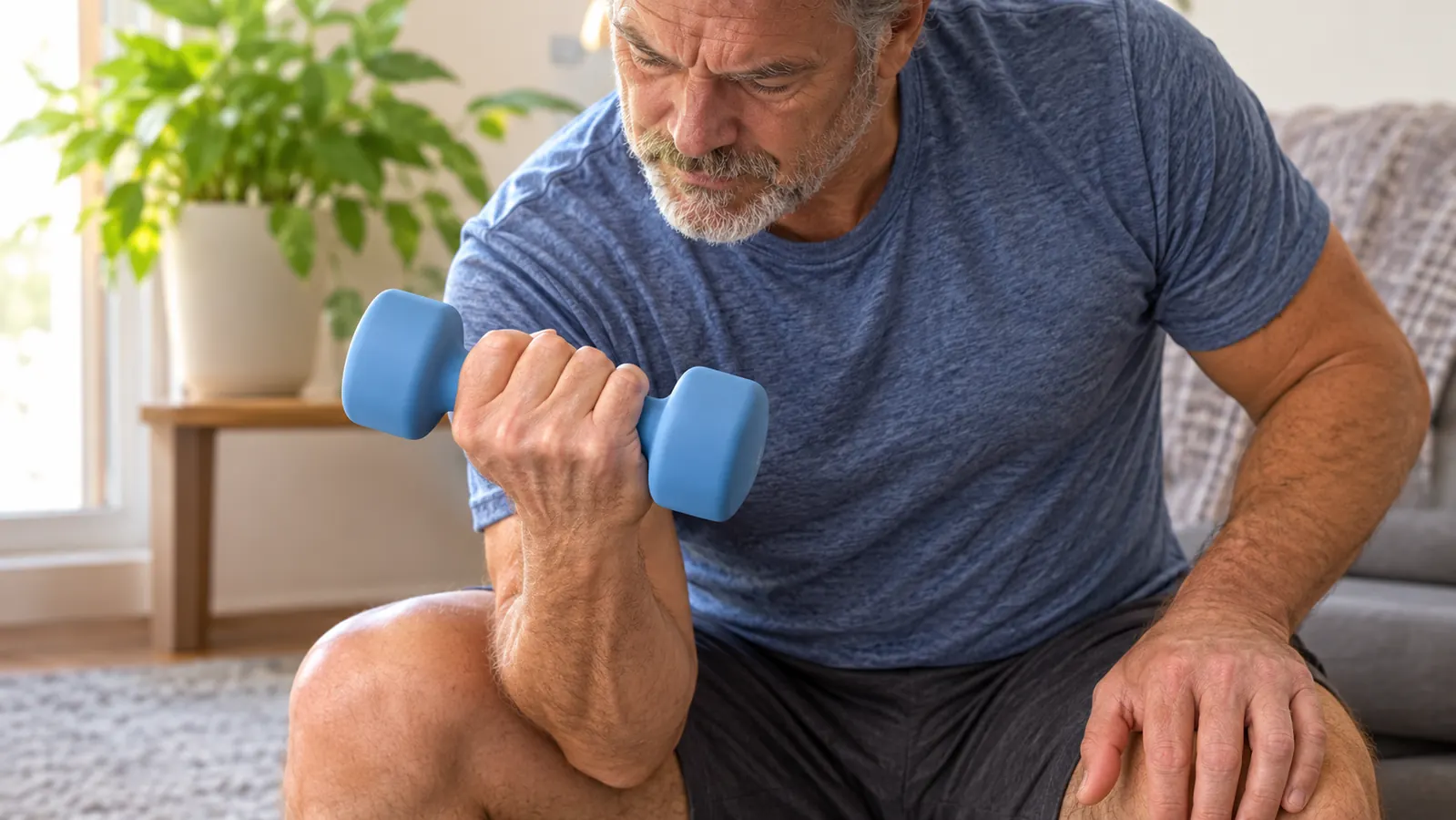
The listing gives the head as 7.87 inches long and 5.71 inches wide, which means nothing until you are holding one. What I noticed first is that the grip is genuinely medium. It is not the thin bar you find on cheap vinyl weights, and it is not so thick that my fingers barely close around it. There is a solid iron core inside the neoprene, so the weight sits in the palm like one piece of metal rather than something hollow that shifts when you move.
Six pounds total for the pair sounds like nothing, and for a fit forty year old it is nothing. For me it was the right starting point. The first week I did two sets of ten curls and my arms were honestly tired the next morning. That told me I had found a real place to begin rather than a token weight I would outgrow in an afternoon. I would rather start too light and keep going than start too heavy and quit in a week with a sore elbow.
The honest part is that I outgrew them faster than I expected. By about month four I was using the three pound pair for warm-up sets and reaching for something heavier for the working sets. That is not a defect in the dumbbell. It is what a light weight is for. But if you are stronger than you think you are, and most people are, buy the pair above the one you are eyeing. You will spend less in the long run than I did.
One more thing about the feel. The neoprene surface is slightly warm to the touch compared with bare iron, which matters in a Michigan January when the room has been closed off all night. I never once had that flinch of picking up something cold first thing in the morning. It sounds like a small thing. It is the kind of small thing that decides whether I do the set.
Ten months in, the grip has not slipped once mid-set, and my hands are not what they were at forty.
The Hex Shape Matters More Than I Expected
I did not think much about the flat-sided hex heads when I ordered. I assumed it was a marketing line. Then I remembered the round dumbbell I tried to use for a push-up variation years ago, where I spent more energy chasing it across the floor than doing the exercise. The hex head stays where you put it. On carpet, on the mat, on the shelf. It does not roll into the gap behind the radiator where I would need a broom handle to fish it out.
The flat sides also give you a stable starting position. When I set the weights down between sets, they sit flat, and I can pick them back up without looking down and hunting. At my age, not having to look down and hunt for something is a small safety feature, and I will take every one of those I can get.
The neoprene coating is doing more work than I gave it credit for. Bare iron would be slick the moment my hands warmed up, and it would leave marks on the carpet where I set it down. This coating is grippy without being tacky, it does not stain, and after ten months of daily handling it still looks like a dumbbell rather than a relic.
Where They Fall Short
The three pound pair runs out of road. That is the main thing and I want to be plain about it. If your goal is real strength work, this is a warm-up weight and nothing more. I bought a heavier pair within four months. Had I been honest with myself about where I was actually starting from, I could have saved myself a purchase.
The neoprene is a coating, not armor. Mine has a scuff from the heater, and that happened with ordinary indoor use. If you drop these on concrete or a garage floor, or if a dog decides one is a chew toy, the coating will give long before the iron core does. Treat them as what they are, which is indoor home equipment for a carpeted room.
They are also small. The head is under eight inches, the grip is medium by design, and if your hands are large the handle may feel slight. Gene has bigger hands than I do and he found them a little dainty for anything past a few curls, though he is also the man who thinks three pounds is a snack.
And there is no getting around the fact that a fixed pair is a fixed pair. You cannot add a pound and a half on a good day the way you can with something adjustable. For me that simplicity is the point. For someone who wants to progress in small increments without buying again, it is a genuine limitation.
What I Liked
- Hex heads stay put on carpet and on the shelf, no chasing them between sets
- Medium grip with a solid iron core, no shifting or hollow feeling in the palm
- Neoprene surface is grippy in a warm hand and does not mark the floor
- Survived ten months of daily handling and drops on carpet with one cosmetic scuff
- Right size for seated work in a small room, easy to keep within arm's reach
Where It Falls Short
- The 3 lb pair stops being challenging within about four months
- Neoprene is a coating and will scuff against hard edges like a heater
- Grip may feel slight if your hands are large
- Not suited to concrete, garage floors, or outdoor use
What I Compared Them To
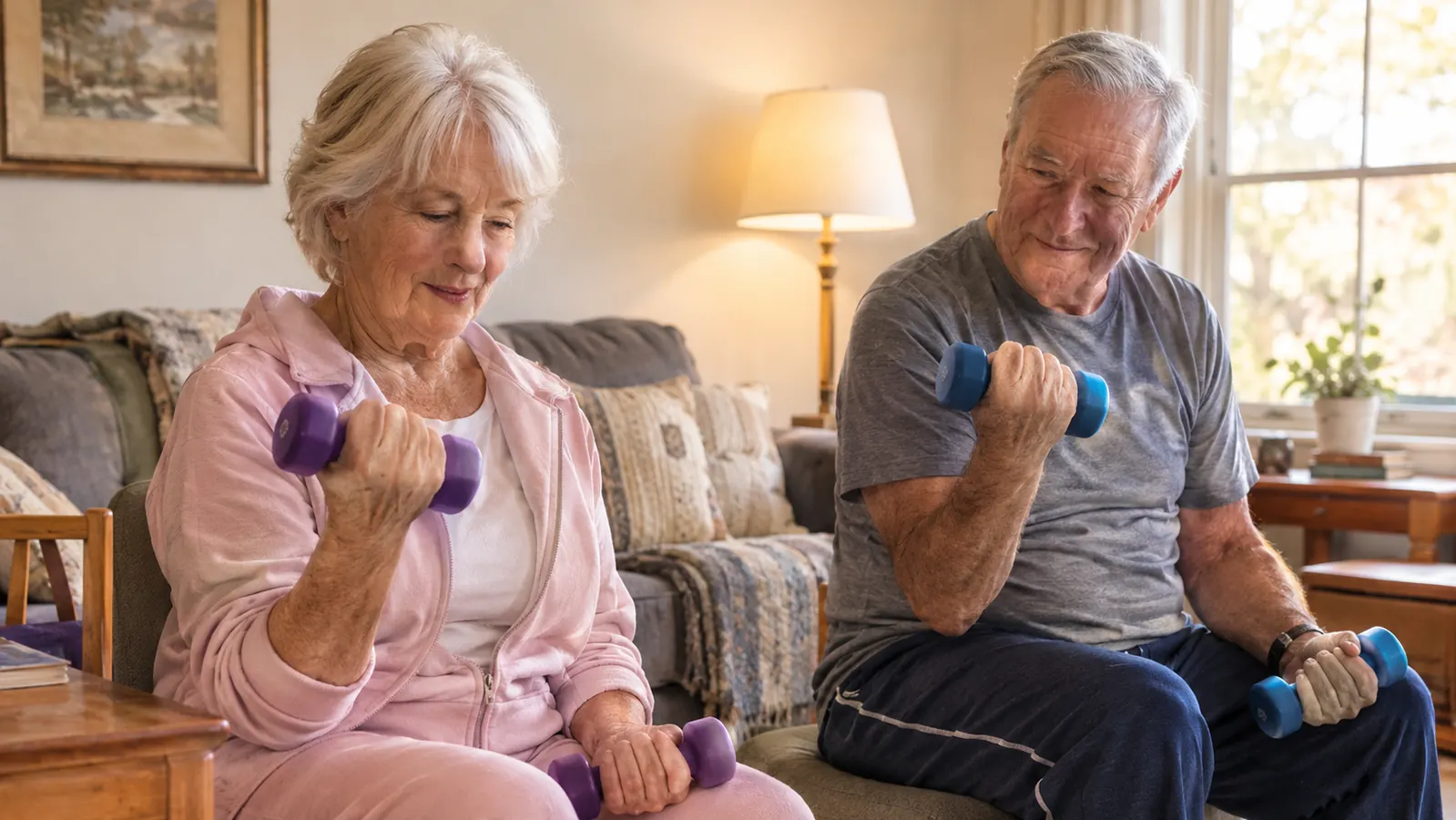
Before these I had a set of adjustable ankle weights that I used for leg work and tried to use for arm work exactly twice. The straps were fussy, the weight shifted, and getting them on and off took longer than the exercise itself. A fixed dumbbell that you simply pick up is a different experience entirely. I also stood in the aisle and looked at the vinyl-coated weights, then put them back down, because the coating felt slick in my hand and the handle was thinner than I wanted.
I considered the adjustable dumbbell sets too, and decided against them for one reason. In my house, anything with a dial or a pin or a cradle has a way of becoming a project. I wanted the thing I would actually do at seven in the morning with coffee still in my system. Two weights, one shelf, no decisions.
The CAP pair is not the cheapest option on the shelf and it is not the fanciest. What it has going for it is that it is exactly what it says it is. Two 3 lb weights with a medium grip, a solid core, and hex heads that do not roll. Nothing on it needs charging, adjusting, or assembling, which at 68 is a feature I have come to value above almost anything else in the house.
Who This Is For
Adults in their sixties and beyond who have been told to build a little strength and do not know where to start. People doing seated work in a small room, people coming back from an injury or from a long stretch of not moving much, people who want one pair of weights next to the chair for ten minutes a day. If you are doing physical therapy exercises at home and your therapist has said light weights, this is a sensible first pair.
It also suits anyone who has bought exercise equipment before and watched it gather dust. The barrier here is about as low as it gets. You pick it up, you do twelve curls, you put it down. There is no reason to put it off until you have more time or a better room or a proper mat. That low barrier is worth more than any feature on the label, in my experience.
Who Should Skip It
Anyone already lifting regularly, or anyone under sixty who is reasonably active. You will pass three pounds in a couple of weeks and wish you had bought the five or the eight instead. Skip it too if you plan to work out in a garage or on a concrete floor, because the coating will not survive that. And if you have a shoulder or wrist problem that has not been looked at, get it looked at before you start pressing anything overhead, even three pounds. That is not me being cautious for the sake of it. That is me at 68 telling you what I wish someone had told me at 58.
Start lighter than you think you should
The right first pair is the one still sitting on the shelf ten months from now, not the one that impressed you in the store. Check today's price on the CAP 3 lb pair and the other sizes on Amazon.
Amazon Check Today's Price on Amazon →