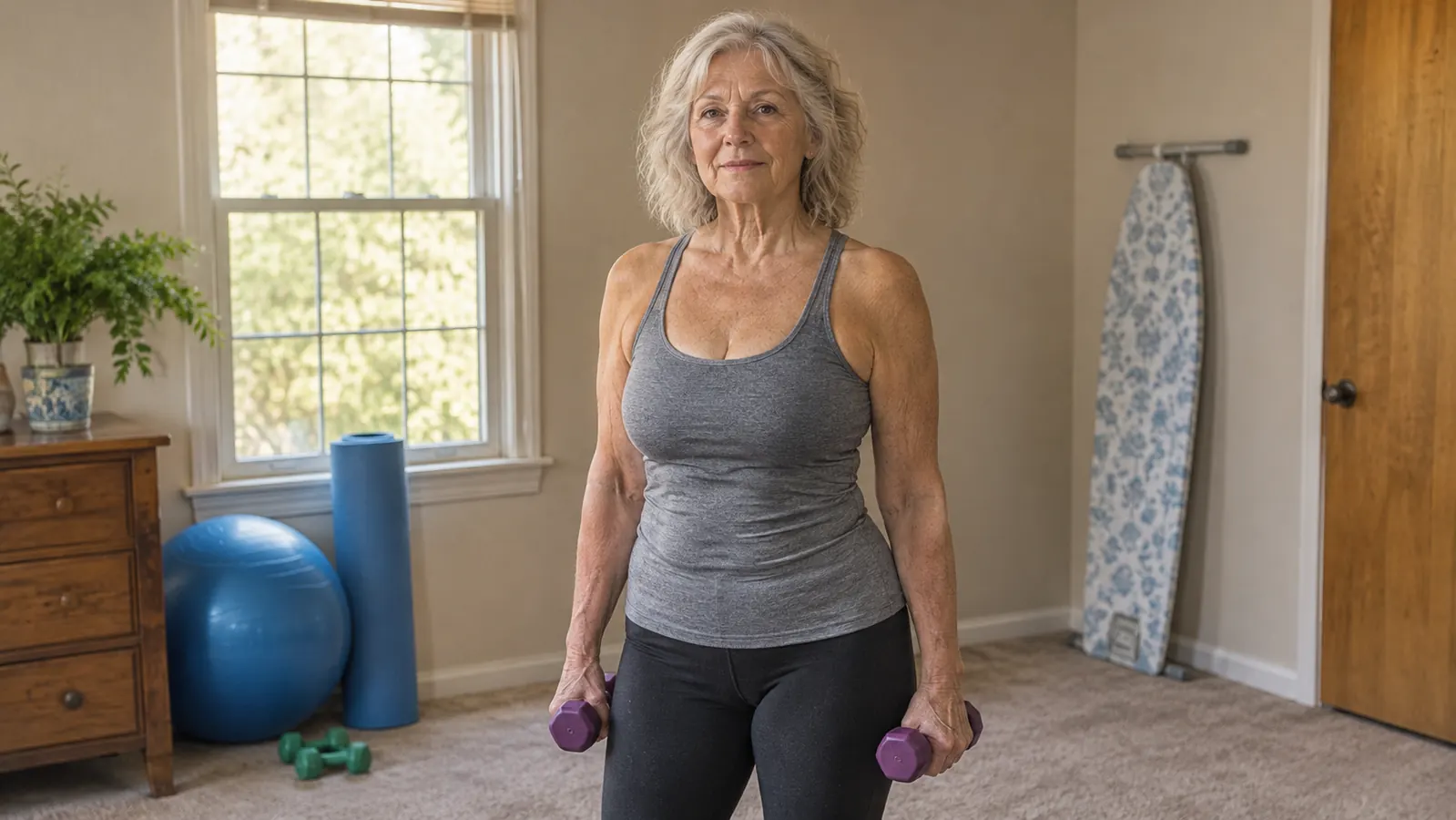
The first thing nobody tells you about a three-pound dumbbell is that it will feel like a joke in your hand for about a week, and then it will feel like exactly enough. I bought the CAP Neoprene Dumbbell pair, the three-pound set, six pounds total, in the spring after my doctor told me to keep moving and build the muscle around my right knee. I had been using two cans of soup from the pantry for a month. Part of me thought I was being silly spending money on something I could have kept faking with groceries, and I want to be honest about that from the start, because that is the whole point of this piece.
What I found after four months of using them most mornings is that small weights are not the beginner version of the real thing. They are the real thing, for a certain job. If you are sixty-eight like me, or seventy-one like my husband Gene, the job is not building arms the size of tree trunks. The job is reminding your shoulders, your hips and your knees that they still have work to do, without waking up the next morning feeling punished. Three pounds does that job. A can of soup does not, because a can has a rounded metal lip and a paper label that gets slick the moment your hands warm up.
The Quick Verdict
Well made, comfortable in the hand, and honestly more useful than the weight suggests. The soft coating will scuff, you cannot add weight without buying another pair, and the head is bulky in very small hands. For a first pair of hand weights after sixty, it is a sound place to start.
Amazon Check Today's Price →Six pounds total that my hands can actually hold on to at seven in the morning
Two matched three-pound weights with a flat-sided head that stays where you put it and a grip wide enough for hands that have done some living. If every set at the store starts at ten pounds, start here instead.
Amazon Check Today's Price on Amazon →The Thing Nobody Tells You: Small Weights Are Not a Warm-Up
Walk into any sporting goods aisle and the dumbbells start around ten pounds and climb. Everything below that is shelved like an afterthought, and the message, whether anyone means it or not, is that light weights are for people who are not serious. That message is wrong for a whole group of us. When I finally had my knee looked at, the physical therapist handed me a two-pound cuff and told me to do ten slow leg lifts. Ten. It took about ninety seconds. She said the point was not to exhaust the muscle, it was to teach it to fire again without swelling up afterward.
That is what the CAP three-pound pair does for my arms and shoulders. I do eight or ten repetitions of something, slowly, and stop while it still feels easy. Some mornings I do a second round. Some mornings I do not. Four months in, I can carry the laundry basket up from the basement without stopping halfway, which I could not do in March. That is not a dramatic transformation and I am not going to pretend it is. It is a small honest improvement that came from a small honest amount of work, and three pounds was the right amount of work.
There is a practical reason light weights get overlooked, and it is not vanity. Most of the damage we do to ourselves at this age does not come from lifting too little. It comes from lifting too much after doing nothing for two years. I did that with a bag of mulch in the spring of 2023 and my shoulder was angry with me for six weeks. A three-pound weight in each hand lets you practice the movement without paying for it the next day. You are rehearsing. That is the job.
What the CAP Pair Actually Is, in Plain Terms
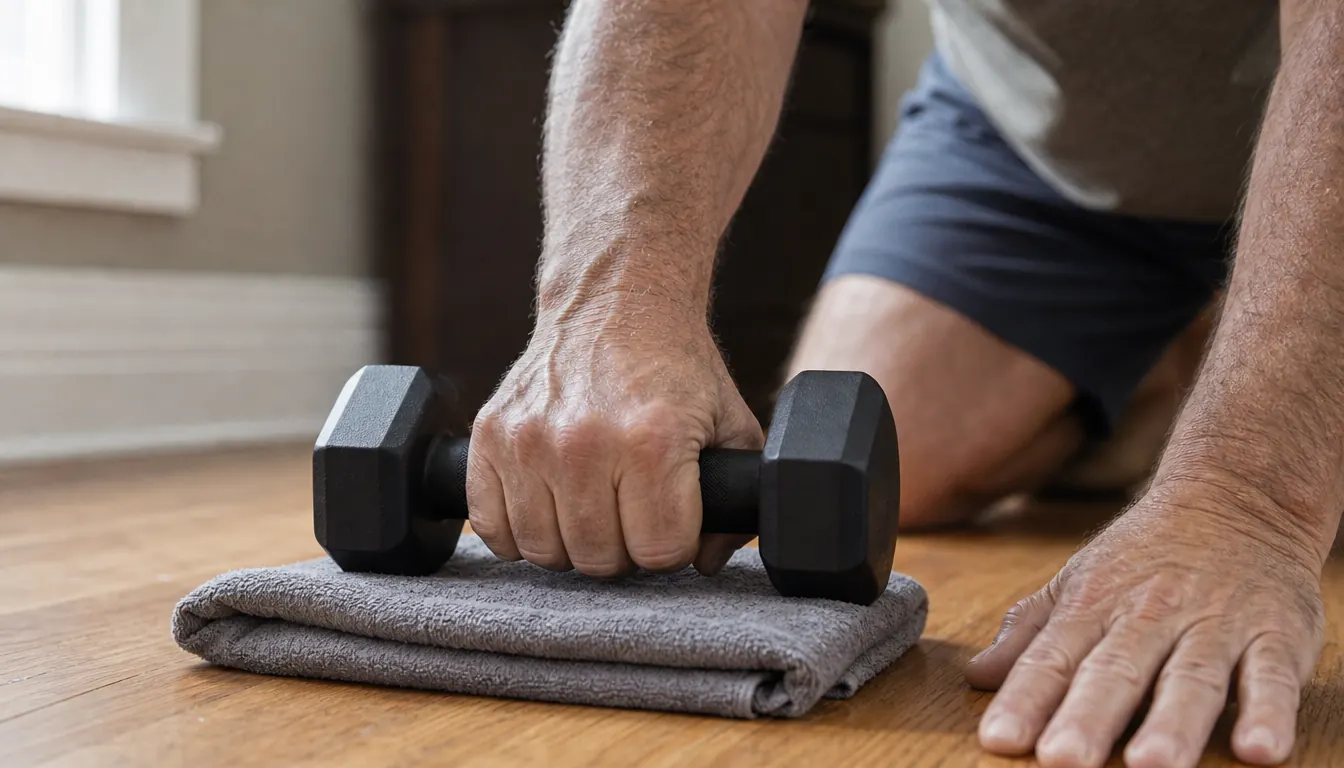
You get two dumbbells, three pounds each, six pounds total in the box. The heads are hex shaped, flat on six sides, which matters more than it sounds like it should. Inside is a solid iron core, ASTM A48 Grade 20, and the outside is neoprene, the soft rubbery coating that makes them quiet and grippy instead of cold and clanking. Each one measures about seven and seven-eighths inches long and five and three-quarters inches wide. The grip is a medium size, and the handle underneath the coating is iron. They are listed for arm work, though I use mine for shoulders and back as well.
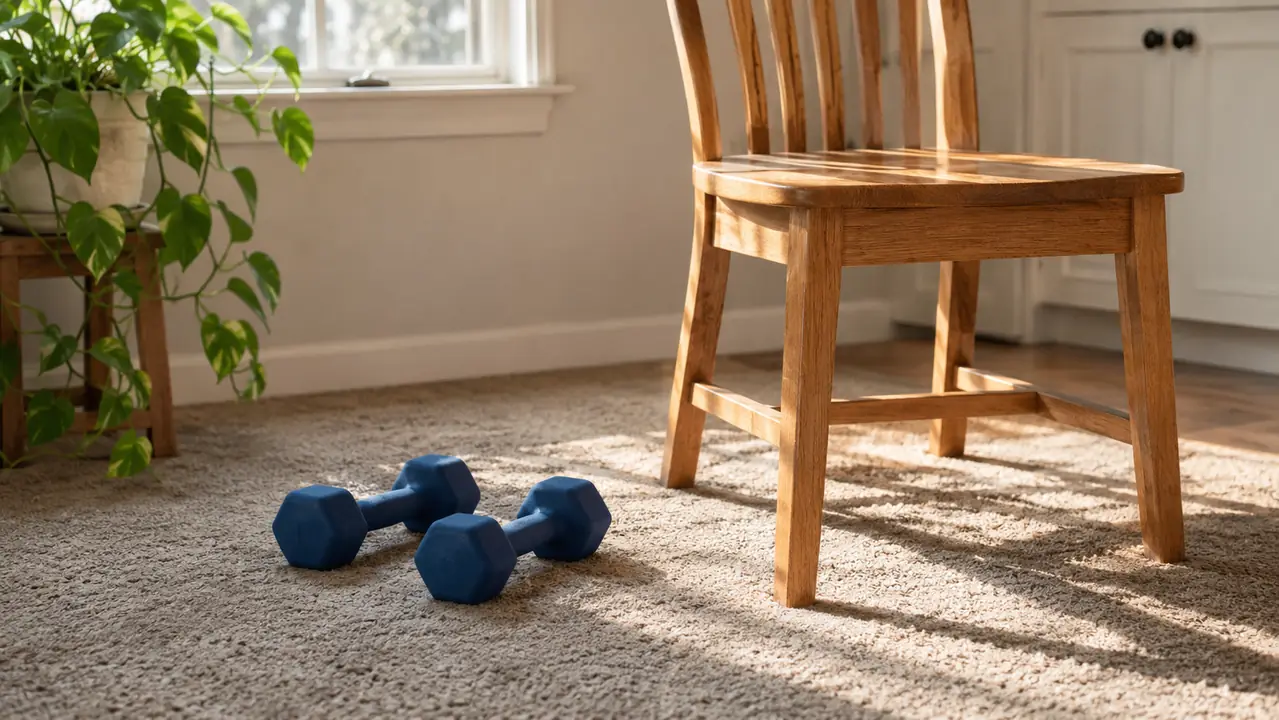
Nothing about them is fancy. There is no stand in the box, no rack, no printed workout chart, no code to scan for a video series. They arrive as two weights and that is what you get. For some people that is a complaint. For me it was a relief, because the last thing I need at sixty-eight is another screen tallying whether I did enough repetitions. I keep them on the carpet in the exercise room, which is the spare bedroom with the ironing board still in the corner, and I pick them up when I walk past. That is the entire system.
The Neoprene Coating: Good, and Not Forever
Here is where I will be more honest than the listing. Neoprene is a coating, not the weight itself, and coatings wear. Mine have a scuff on one corner from the day I set one down on the concrete of the garage instead of on the carpet. It is cosmetic. The iron is not exposed and the weight has not changed. But if you are the sort of person who wants a piece of equipment to still look new after five years of daily use, know now that soft-coated weights do not stay new looking. They get marks. They pick up lint and dust if you keep them on a shelf. They are tools, not decorations.
What the coating buys you is worth the trade. It is quiet. When I set one down on the coffee table in the living room while Gene is watching the evening news, he does not hear it. Bare iron or chrome would clank, and would eventually mark the furniture. It is also warm to the touch, which sounds like a small thing until you have picked up a cold metal handle at seven in the morning in February in Michigan. And it grips. My hands are not what they were. I have dropped a drinking glass in the kitchen this year. I have not dropped one of these.
Four months in, I can carry the laundry basket up from the basement without stopping halfway, which I could not do in March.
Where These Frustrated Me
Two honest complaints. The first is the size jumps. CAP sells these as pairs and sets, so if you want to go from three pounds to five or eight, you buy a whole new pair rather than adding to what you already own. That is how most dumbbells work, so it is not a flaw exactly, but it does mean the three-pound pair is either your starting point or a dead end in a drawer. I am still on the three-pound pair four months in, which tells you something about how slowly this should go for a person my age, and also that I will be buying again before the year is out.
The second is the size of the head relative to the weight. Because the coating has to wrap the iron, a three-pound dumbbell is physically bigger than you might picture, close to eight inches long. In my hand that is fine. For a smaller hand doing a wrist curl, the bulk gets in the way a little, and you have to angle it rather than hold it straight. If your hands are on the small side, hold one before you commit, or buy from a store where you can walk in and wrap your fingers around it. That is the one piece of advice here I would underline twice.
What Four Months Actually Changed
I keep a small notebook, because I taught third grade for thirty-one years and I do not trust my memory. Here is what the notebook says. Week one: eight repetitions, arm sore in a good way, stopped early on purpose. Week three: twelve repetitions, no soreness the next day. Week six: added a second set, then stood up too fast and had to sit on the floor for five minutes. That one frightened me and I called the doctor's office, and they told me to drink more water and stop popping up like a jack in the box. Week ten: carried the groceries in from the car in two trips instead of four.
None of that is a headline. It is what progress looks like at sixty-eight when you have a knee that complains and a driveway that iced over two winters ago and left you nervous about your balance. The weights did not fix my knee. The weights are not going to fix anyone's knee. What they did was give me a reason to stand up and use my arms and shoulders for a few minutes every morning before the coffee went cold, and that reason was heavy enough that I actually picked them up instead of walking past.
The Grip and the Hex Head, Which I Did Not Expect to Care About
The medium grip is the part I did not expect to care about and now care about most. It is wide enough that my fingers wrap around it but not so wide that my thumb has to stretch to reach. Some hand weights are made with a thin handle that digs into the palm, and after ten repetitions you are thinking about your hand instead of your shoulder, which defeats the entire purpose. These do not do that. The coating has a slightly textured surface rather than a slick one, and it stays that way even when my palms are damp from a shower or from the wood stove being up too high in January.
The flat-sided head is the other quiet kindness. Round dumbbells roll. They roll off the edge of a coffee table, they roll under the couch, they roll across a wood floor while you are bent over trying to stretch. A hex head sits still. I set mine down between sets and they stay exactly where I put them. On the carpet in the exercise room they do not budge at all. When I do a set in the living room, I put a folded towel down first, not because they will slide but because I am careful with Gene's floor, and he is careful about reminding me to be.
What I Liked
- The soft coating is warm, quiet and grippy in hands that are not as strong as they used to be
- Flat-sided heads stay put on carpet and do not roll off tables between sets
- Solid iron core rather than a hollow plastic shell filled with sand
- A medium grip wide enough for older hands without forcing the thumb to stretch
Where It Falls Short
- The coating scuffs and picks up dust, so they will not look new for long
- You cannot add weight, you buy an entire new pair to move up
- The three-pound head is bulky for very small hands
- No stand, chart or guidance in the box, so you need your own plan
Who This Is For
This pair is for the person who has been told by a doctor to keep moving and has no idea where to begin. It is for the person rebuilding after a surgery or a fall who needs to restore range of motion without loading a joint. It is for the person whose balance is not what it was and who wants something light enough to hold while doing chair exercises behind the kitchen counter. It is for the person who would rather do ten minutes of something in the morning than ten minutes of nothing. If that is you, three pounds is a defensible starting place, and these are well made for the money.
I would also say this to the spouse or the grown child doing the buying. Do not surprise anyone with the ten-pound set. I have watched that happen twice in my own family and both times the weights were in a closet by February. Buy the three-pound pair, let the person hold it, and if it turns out to be too light after a month, that is a good problem and it cost you very little to find out. The goal is to still be doing this in April, not to impress anybody in January.
Who Should Skip It
Skip these if you already lift. If you can do a set of ten overhead presses with a gallon of milk in each hand without wobbling, three pounds will not challenge you and you will be bored by the second week. Skip them if you want one adjustable set that grows with you, because these do not adjust and you will end up owning three pairs. Skip them if your grip trouble is severe enough that a medium-width handle is painful to hold. And skip them if you want something to strap to your ankles, because these are hand weights and using them as ankle weights is a good way to bang your shin.
One more caution, and I mean it kindly. If you have a heart condition, a replaced joint, osteoporosis, or you take a blood thinner, talk to your doctor before you start any of this, even the three-pound version. I am not being dramatic for effect. I checked with mine and she gave me two movements to avoid entirely, and I would not have known that on my own. The weights are just weights. The plan is the part that needs a second opinion.
And start slower than you think you need to. My routine runs about twenty to thirty minutes most mornings after coffee, and the weights are only part of it. The first two weeks I used them for five minutes and did the rest of the session empty handed. There is no prize for rushing. If your shoulder is talking to you the next day, you did too much, and the correct response is to cut the work in half rather than to push through it.
Start with three pounds and still be doing it in April
Two matched three-pound weights, a head that stays where you set it down, and a grip built for hands that have done some living. If you have been waiting for permission to start small, this is the permission.
Amazon Check Today's Price on Amazon →