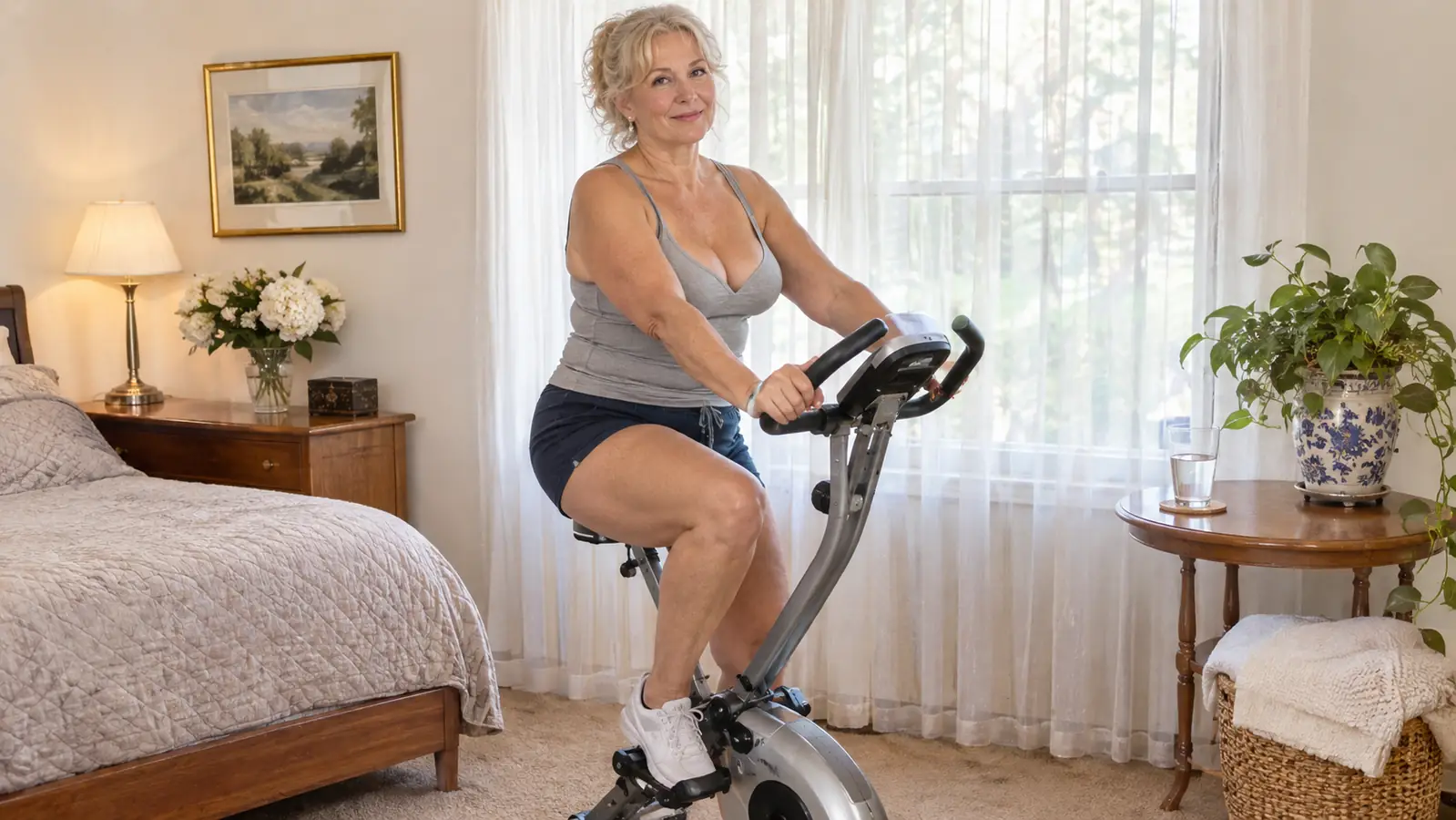
The first thing that went was my confidence. After I slipped on the icy driveway two winters ago, I stopped trusting my legs on anything uneven, and my right knee, which has carried mild osteoarthritis for a while now, started complaining about every walk I did take. My doctor's advice was not complicated. Keep moving. Build the muscle around the joint. So I went looking for something I could do indoors from November to March without pounding on that knee. That search is how a BARWING stationary bike ended up in my spare bedroom, and it is why I now believe low-impact cycling suits people our age better than almost anything else I have tried.
I am not a fitness person. I taught third grade for 31 years, I am 68, and my idea of exercise used to be raking leaves and calling it a day. What I am is somebody who needed a way to move that would not hurt, would not frighten me, and would not eat the whole room. Here are ten reasons the low-impact part of cycling turned out to matter far more than I expected when I started.
The Bike That Got Me Through a Michigan Winter
The BARWING folds into a corner, holds riders up to 350 pounds, and starts at a resistance light enough for a cranky knee. It is the one piece of equipment I actually kept using.
Amazon Check Today's Price on Amazon →Your feet never leave the pedals, so nothing jars that knee
Walking sends a jolt up through the leg with every step. On a bike, your foot stays put and the pedal comes to you, which means the work lands in the muscle instead of the joint. I felt the difference in the first week. My knee would be warm afterward, not angry. The adjustable foot straps matter more than they sound, because a foot that slides around makes you tense up, and that tension turns a gentle ride into a chore that leaves your hips aching for reasons that have nothing to do with exercise.
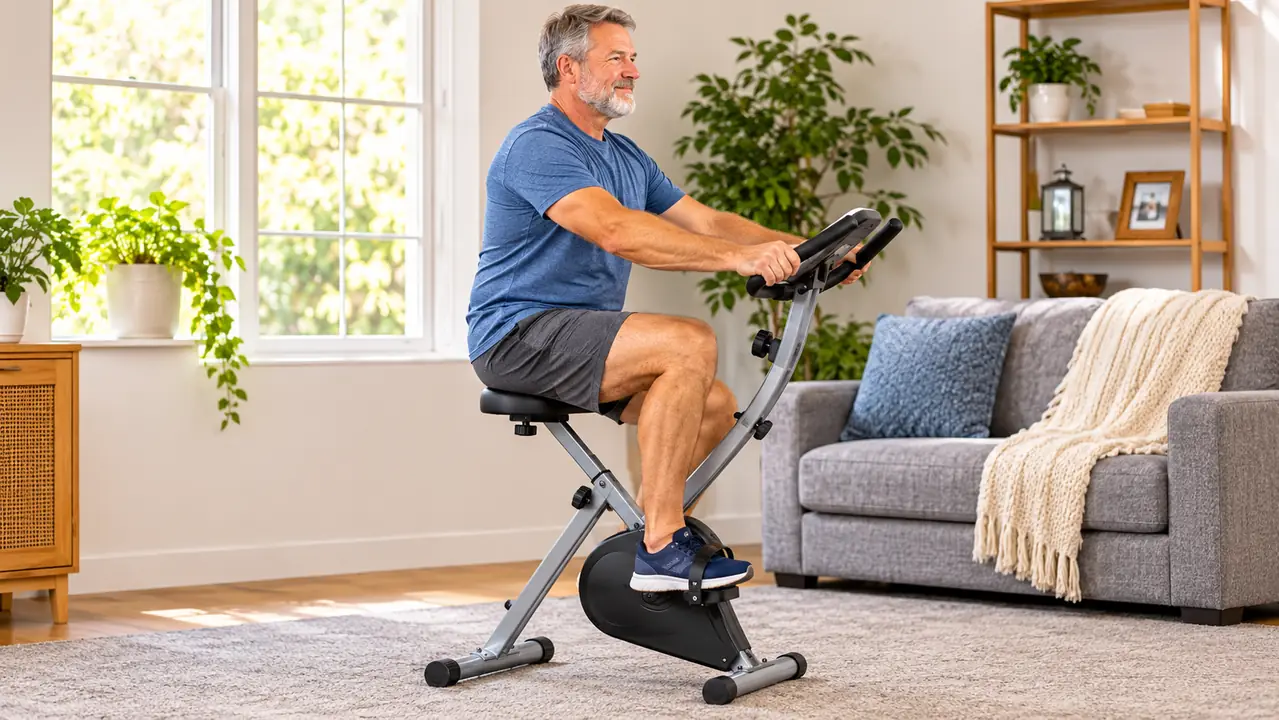
Eight seat heights and two seat angles, so the fit is your call
This is the part I got wrong at first. I set the seat too low, rode fifteen minutes, and limped to the kitchen. Once I raised it, the bend in my knee at the bottom of the pedal stroke opened up and the ache went away. Eight height settings and two angle settings give you room to find that spot. Take ten minutes with it and set it once properly instead of fiddling every morning. The markings on the post are small, so if your eyes are like mine, do it in daylight.
The backrest does the holding up, not your lower back
I did not expect to care about this. Then I rode a friend's bike with no backrest and spent the entire time bracing myself with my arms. Sitting against something means your effort goes into your legs instead of into staying upright. On the mornings when my back is stiff, I can lean back and still turn the pedals, and that is the difference between a session and a skipped day. Give it a week before you decide. It is one of those things you only notice when it is gone.
Sixteen resistance levels mean level one is a real starting point
Some bikes go from easy to impossible in three steps. This one has sixteen, and for the first month I never left the low numbers. That is not a failure. It is the whole point. You want a setting where you can pedal for ten minutes and hold a conversation. When that gets easy, nudge it up one. I am at a higher level now than I was in January, and I could not tell you the day it happened. There is no shame in level two. Level two is where the habit gets built.
It runs quiet enough to sit in front of the television
The magnetic resistance on the BARWING is the reason. There is no friction pad grinding on a wheel, so the loudest thing in the room is usually Gene's news program. The belt drive helps too, with no chain clicking and no grease working its way onto the carpet. I ride in the living room all winter and nobody has ever asked me to stop. If you have hardwood instead of carpet, put a mat underneath and you will hear even less.
My knee would be warm afterward, not angry. That is the entire test I use now.
You can stop mid-show, mid-song, mid-anything
A class has a clock and a teacher. A treadmill has a belt that keeps moving whether you are ready or not. On a bike, when your knee says enough, you stop pedaling and the machine simply sits there. That sounds small. For somebody who has grown nervous about her own body, it is the difference between trying something and quietly avoiding it for another five months. Pay attention to that feeling when you are choosing between machines.
Two minutes counts as a session
My routine is twenty to thirty minutes most mornings after coffee, but that is not how it started. It started with five minutes and a promise to myself that five was allowed. Some days now I do two minutes and get off, and I count it, because counting it is what makes tomorrow possible. The habit survives because the bar is low enough to step over on a bad morning. Perfection is what kills these things, not age.
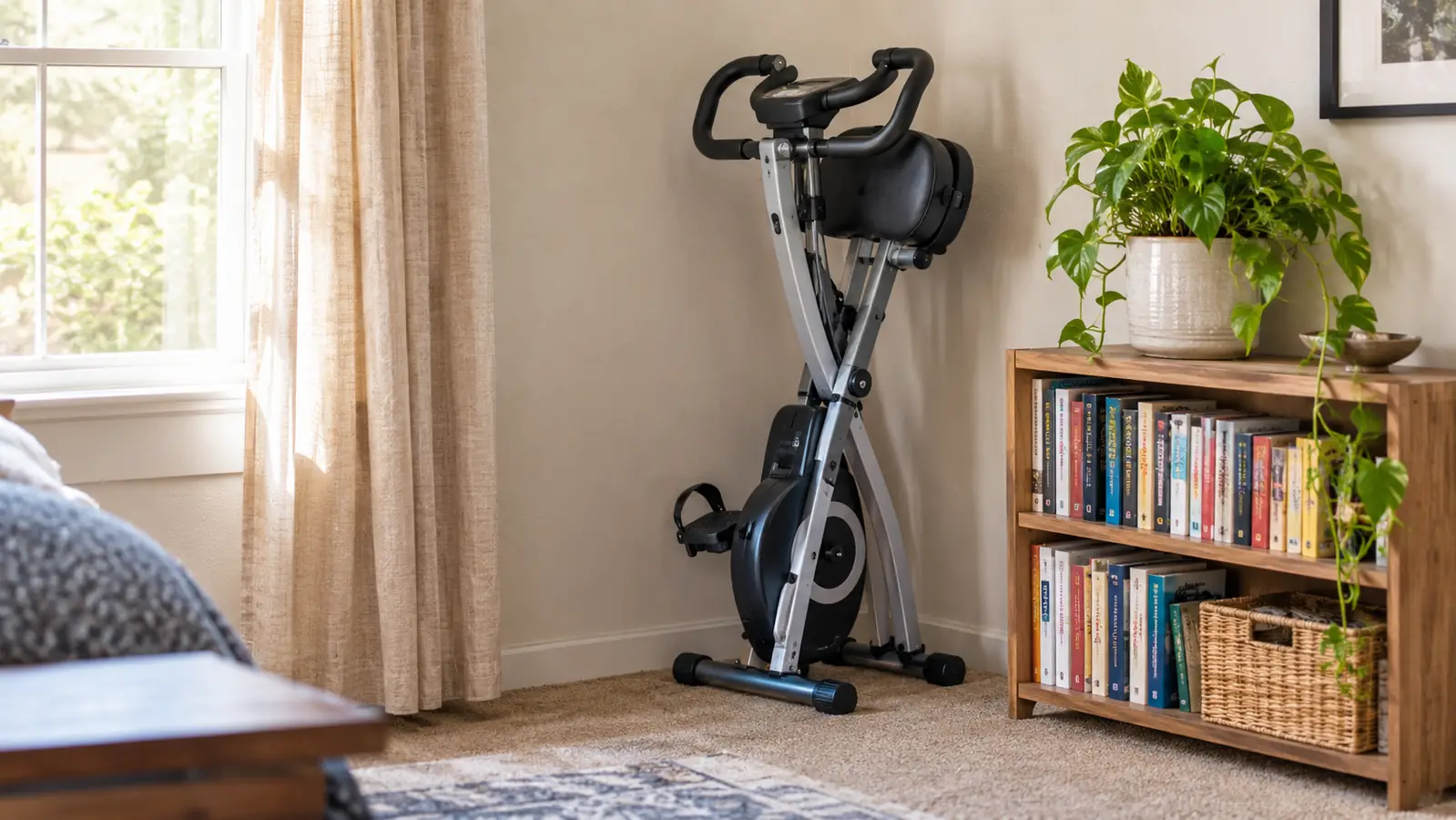
It folds and lives in the corner of the spare room
The exercise room in my house is a converted bedroom with carpet and not much else. The bike measures about 36 inches deep by 18 inches wide by 45 inches tall when it is set up, and it folds when you want it out of the way. I will be honest with you. I fold it about twice a year, usually when the grandchildren visit. But knowing I could move it is what made me willing to put it in that room at all.
Three riding postures for the days your back is cranky
The bike is built around three riding positions, and I use all of them depending on the morning. Upright when I feel good. Leaned back when my back is complaining. Somewhere in between most days. Having the choice means a sore back does not automatically mean a rest day, and at our age the rest days are the ones that quietly turn into rest weeks before you notice.
It turns a Michigan winter into a routine instead of a pause
From November to March I am indoors, and before the bike that meant five months of sitting still followed by a sore spring. Now the season has a shape to it. Coffee, twenty minutes, then the rest of the day. My neighbor and I still walk outside once the ice clears, and I can feel the difference on that first walk. That is worth more to me than any number appearing on a screen.
What I'd Skip
Two things. First, I would skip any plan that starts at thirty minutes because it sounds respectable. I have watched myself and other people my age quit that way. Start at five and let it grow on its own. Second, I would skip the urge to ride through pain. Muscle tiredness is fine and expected. A sharp catch in the knee or a twinge in the hip is not, and no machine is worth pushing through that. Get off, put some ice on it, and mention it to your doctor at your next visit, especially if you have heart trouble, balance problems, or a joint that has been replaced. That is not me being cautious for the sake of it. It is what my own doctor told me, and she was right.
If Your Doctor Said Keep Moving, This Is One Way to Do It
Five minutes on a quiet bike in the corner beats another winter on the couch. The BARWING is the one I kept, and the one I would tell a friend to look at first.
Amazon Check Today's Price on Amazon →